Black Paper Bags can make a simple product feel considered: matte black paper, crisp folds, and sturdy handles create a clear impression at checkout. For wholesale buyers, appearance is only part of the decision. Unit price, paper weight, handle construction, print consistency, and carton dimensions all affect cost and day-to-day performance. Small details matter.
The U.S. Environmental Protection Agency’s 2018 Advancing Sustainable Materials Management report estimated that 80.9% of paper and paperboard packaging was recycled. That figure covers a broad packaging category, not black shopping bags alone, so it should not be treated as a bag-specific outcome. Still, it gives buyers useful context when comparing paper options. A recyclable material does not guarantee local acceptance; coatings, inks, and collection systems can change the picture. Worth checking.
This guide examines what makes the best Black Paper Bags for wholesale in 2026, from practical strength to reliable supply. It considers kraft grades, handle styles, sizing, customization, and the trade-offs between low unit cost and dependable quality. Buyers should request samples and confirm specifications before placing large orders. A bag that looks premium in a catalog may feel flimsy when loaded with boxed goods or cosmetics. Not every supplier’s “heavy-duty” label means the same thing. Clear measurements and repeatable quality checks matter more than attractive product photos.
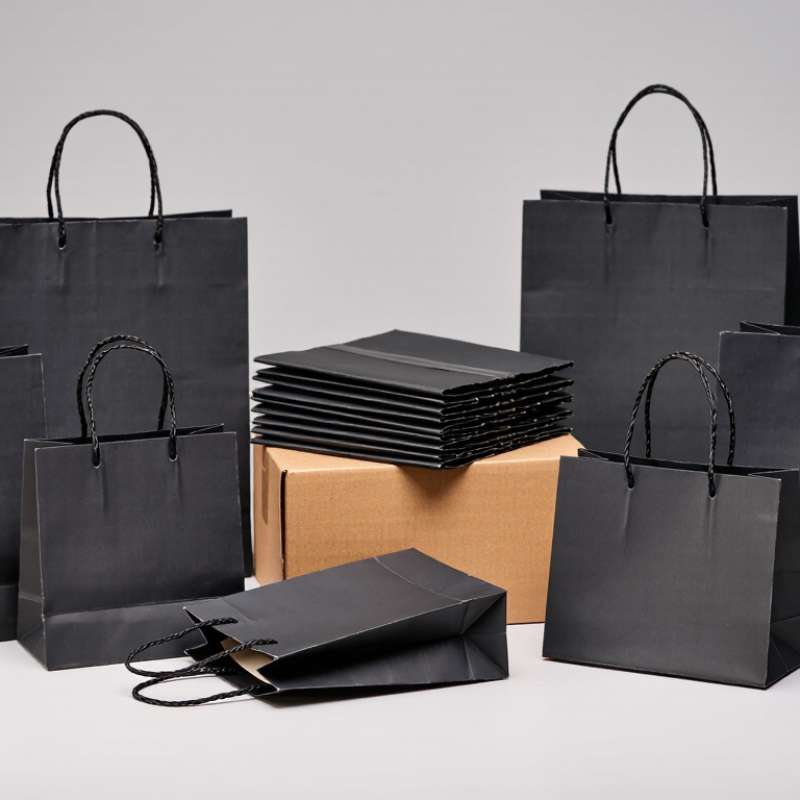
Black paper bags are carry bags made from dyed or coated paper, usually with folded sides and glued seams. Their dark surface gives products a neat, understated presentation, while kraft or recycled-paper options can suit different purchasing goals. Some are matte; others have a slight sheen. The finish affects appearance and how fingerprints show.
These bags are common in clothing shops, cosmetics counters, bookstores, gift stores, and specialty food retail. A small bag can hold a candle or boxed soap; wider gussets fit folded garments or takeaway containers. For bakeries and cafés, paper bags work well for dry pastries and packaged goods, but oily or hot items may need a suitable inner lining. Not every black bag is suitable for food contact, so buyers should ask suppliers for intended-use documentation. Worth checking.
For wholesale orders in 2026, compare paper weight, handle attachment, seam quality, dimensions, and print consistency using samples. Pull gently at the handles and check whether corners split under load. Black can look refined, but scratches, pale paper edges, and dust may stand out under bright shop lighting. That detail is easy to miss. A heavier bag is not automatically better; it may cost more and use more material without helping a light purchase. Choose for the product, not just the product photo.
Black paper bags are paper shopping, takeaway, or packaging bags colored black on the outside. They are available in different paper weights, formats, finishes, and handle styles. Dimensions below are typical examples, not fixed industry standards; specifications vary by supplier and intended load.
| Bag type | Typical size (W × gusset × H) | Common uses | Typical construction | Wholesale selection notes |
|---|---|---|---|---|
| Flat merchandise bag | Approx. 180 × 80 × 250 mm | Small clothing items, books, cosmetics, and accessories | Usually unhandled; paper weight selected according to product weight | A compact option for lightweight goods and retail counters; confirm the usable internal dimensions. |
| Twisted-handle shopping bag | Approx. 260 × 120 × 350 mm | Clothing, gifts, books, and general retail purchases | Commonly made from kraft paper with twisted paper handles and a reinforced base | Check handle attachment and base construction against the expected load; these details affect carrying performance. |
| Flat-handle shopping bag | Approx. 320 × 160 × 400 mm | Apparel, household items, and larger retail orders | Paper handles attached to a gusseted paper bag; available in different paper weights | Useful when a wider opening is needed; compare handle strength, bag capacity, and storage requirements. |
| Wide-base gift bag | Approx. 250 × 150 × 200 mm | Gift sets, boxed products, candles, and specialty retail | Often uses a broad gusset; may include paper handles or a folded top | Match the base width and depth to the product footprint, and allow room for protective wrapping. |
| Bakery and takeaway bag | Approx. 180 × 100 × 300 mm | Baked goods, packaged snacks, and takeaway orders | May be supplied with a flat base, side gussets, or a window; food-contact suitability depends on the materials and intended use | For direct food contact, verify applicable food-contact compliance and any grease or moisture resistance requirements. |
| Wine or bottle bag | Approx. 120 × 90 × 380 mm per bottle | Bottled beverages, oils, and other tall packaged goods | Narrow format, often with a reinforced base; dividers may be available for multiple bottles | Confirm the bottle diameter, height, and loaded-bag capacity; dividers help separate items but do not replace careful handling. |
| Luxury presentation bag | Approx. 300 × 120 × 300 mm | Premium gifts, cosmetics, accessories, and event packaging | May use heavier paper, a matte or gloss finish, and cord or ribbon handles | Request samples to assess color consistency, finish, handle attachment, and how the bag performs with the intended contents. |
Buying note: For wholesale orders, compare bag dimensions, paper weight (often specified in gsm), handle type, printing or finish options, packing quantity, and minimum order quantity. Ask for a sample or specification sheet before placing a large order, especially when load capacity or food-contact suitability matters.
Smooth kraft gives an even surface for simple printing. Recycled kraft shows visible fibers and slight shade changes. Check a sample before ordering in bulk.
Lightweight paper suits folded clothing or cards. Heavier stock is better for boxed goods. Test the bag with the actual product inside.
Matte feels understated and hides fingerprints more easily. Gloss can make black look deeper, but scuffs may show under bright lights.
Flat handles store neatly and usually cost less. Twisted-paper handles suit everyday shopping. Rope handles feel more substantial but need extra packing space.
Gusseted sides help wider items sit upright. A reinforced base supports heavier contents. An empty bag can seem sturdier than it is.
Ask for dimensions, paper weight, handle attachment details, print method, and tolerances in writing. Clear specifications make comparisons easier.
Fill a sample with a realistic load and lift it several times. Inspect the handles and bottom seam. Small flaws matter.
Rub printed areas with a clean, dry cloth to check for transfer. Compare delivered bags with an approved sample. Shades may vary slightly.
It can help with large orders, but it cannot replace agreed specifications. Ask how damaged or late orders are handled. A polished sample can still mislead.
Black Paper Bags are a versatile packaging choice for retail stores, cafés, boutiques, events, and gift packaging. Available in options such as kraft paper, coated paper, and recycled materials, they can be made with different handles, finishes, and construction styles to suit both everyday use and premium presentation. Choosing the right bag starts with matching its size and design to the products it will carry.
For wholesale orders in 2026, compare paper weight, handle attachment, seams, and finish to assess durability and appearance. Consider recycled or responsibly sourced materials where appropriate, and check that customization options—such as colors, printing, and dimensions—fit your needs and budget. Before placing a large order, request samples and confirm specifications, production consistency, lead times, and quality checks with the supplier.

 Judi Packaging