Choosing the right Bottle Gift Bags can shape how customers remember a product, brand, or seasonal purchase. For wholesale buyers, appearance matters, but it cannot stand alone. A glossy finish may attract attention, while weak handles can create problems during transport. Small details matter.
This guide reviews seven practical options for wholesale purchasing. It considers material strength, bottle protection, sizing, printing quality, storage, and overall value. Kraft paper bags may suit eco-conscious retailers, while laminated designs can offer stronger moisture resistance. Fabric bags often create a premium feel, especially for wine, spirits, or corporate gifting. Each style has useful strengths and possible limitations.
The recommendations reflect common sourcing concerns, including minimum order quantities, sample approval, color consistency, and lead times. Buyers should request product specifications before placing large orders. Checking handle attachment points and base construction is also worthwhile. A bag that looks attractive in a sample may perform differently after repeated handling.
Some judgments remain subjective. A luxury finish may not suit a budget retailer. Likewise, the lowest unit price may increase waste or replacement costs. I would test samples with full bottles before confirming a wholesale order. This simple step often reveals more than photographs.
The following selection is designed to help distributors, retailers, event planners, and gift suppliers compare dependable Bottle Gift Bags with clearer expectations. Availability and pricing can change, so supplier verification remains essential.
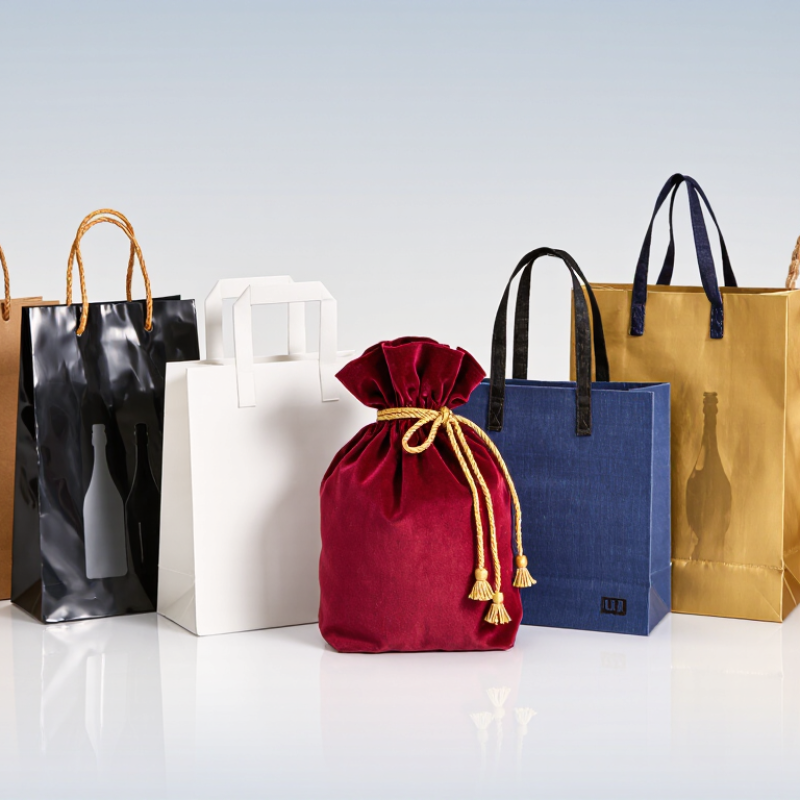
What Makes a Bottle Gift Bag Suitable for Wholesale Buyers
A wholesale-ready bottle gift bag must balance appearance, protection, and repeatable production.
A beautiful sample is not enough. Buyers need stable dimensions, strong handles, reliable inserts, and predictable carton packing. The bag should hold standard bottle sizes without crushing corners or loosening the base. Paper weight, seam strength, and moisture resistance deserve practical testing.
Sustainability also affects purchasing decisions.
McKinsey’s 2023 packaging research found that 60–70% of consumers would pay more for sustainable packaging in several categories. The U.S. EPA’s 2018 dataset recorded 82.2 million tons of paper and paperboard packaging waste, with 46.5 million tons recycled. These figures support recyclable materials, but claims must be specific. “Eco-friendly” sounds weak without material details. I still find this point easy to underestimate.
Tips:
Request a pre-production sample and test it with a full bottle. Check handle comfort, insert fit, moisture behavior, and drop resistance. Ask for material certificates, production tolerances, minimum order quantities, and lead-time records. Confirm whether color, logo placement, and dimensions remain consistent across batches. A lower unit price can become expensive when damaged bags increase returns. Use recognized packaging test procedures, such as ISTA guidance, where suitable. Recycled paper may crease more easily, so the strongest sustainable option is not always the lightest one.
How to Compare Bottle Gift Bags by Material, Size, and Design
7 Best Bottle Gift Bags for Wholesale Buyers?
When comparing bottle gift bags, start with material rather than appearance. Paper bags offer a crisp surface and easier recycling pathways. The U.S. Environmental Protection Agency reported 67.4 million tons of paper and paperboard packaging in 2018. Its recovery rate reached 68.2%. These figures support paper as a practical wholesale option, though recycling depends on local facilities. Recycled paper can also vary in strength. I have seen attractive bags tear around the handle during transport.
Size needs measurement, not guessing. Record the bottle’s height, diameter, shoulder shape, and closure style. Add room for tissue paper without creating excessive movement. A snug base reduces tipping. Reinforced bottoms help with heavier glass bottles. For large orders, request samples from different production batches. Small changes in paper weight can affect stability. Design matters too. A matte finish hides fingerprints, while gloss creates stronger shelf impact. Windows improve visibility but may reduce privacy and structural strength. McKinsey’s 2023 global packaging research found that about 60% of consumers would pay more for sustainable packaging, but price still influences wholesale decisions.
Tips: Compare paper weight, handle strength, insert fit, printing quality, and carton dimensions. Test each sample with a filled bottle. Check scuffing after repeated handling. Do not judge durability by color alone. A beautiful bag can still fail at the base. Consider neutral designs for wider resale use, then reserve detailed artwork for seasonal orders.
7 Best Bottle Gift Bag Types for Wholesale Purchasing
Wholesale buyers need bottle bags that balance shelf appeal, protection, and repeatable costs. The main types are kraft paper, corrugated paper, rigid paperboard, cotton, nonwoven fabric, molded-pulp, and insulated bags. Kraft paper suits everyday retail orders. Corrugated bags add cushioning for glass bottles. Rigid paperboard creates a premium presentation. Cotton supports reuse and a softer touch.
Nonwoven fabric bags are lightweight and economical for large promotional runs. Molded-pulp bags offer a structured, fiber-based alternative with strong impact resistance. Insulated bags suit chilled beverages and short-distance delivery. According to Grand View Research, the global paper bags market was valued at about USD 5.1 billion in 2023, with growth supported by replacement of plastic formats. That trend matters, but paper is not automatically sustainable.
Smithers’ sustainable packaging outlook emphasizes material efficiency, recyclability, and practical recovery systems. Buyers should check bag weight, handle strength, bottle diameter, moisture resistance, and carton packing efficiency. A 2023 packaging survey by McKinsey found that consumers continue to value recyclability and reduced material use, although price remains a major purchasing factor. Real samples are essential. A bag can look strong and still fail at the handle. I learned that the hard way.
For wholesale purchasing, compare total landed cost rather than unit price alone. Request drop-test results, material specifications, printing tolerances, and production samples. Choose kraft or molded-pulp for cost-sensitive orders, rigid paperboard for gifting, and fabric for reuse programs. Insulated formats deserve extra testing. They often need better seams than expected.
7 Best Bottle Gift Bags for Wholesale Buyers? - 7 Best Bottle Gift Bag Types for Wholesale Purchasing
| Bottle Gift Bag Type |
Typical Bottle Fit |
Common Materials |
Typical Load Capacity |
Reusability |
Typical Wholesale MOQ |
Typical Wholesale Price* |
Best Wholesale Applications |
| Kraft Paper Bottle Bag |
Standard 750 ml wine or spirits bottle |
Brown or white kraft paper, twisted or flat paper handles |
1–2 kg |
Low to medium |
500–1,000 units |
US$0.18–0.55 |
Retail checkout, event favors, seasonal promotions, and everyday gift packaging |
| Recycled Paper Bottle Bag |
750 ml wine, olive oil, or specialty beverage bottle |
Recycled kraft paper, water-based ink, paper handles |
1–2 kg |
Low to medium |
1,000–2,000 units |
US$0.22–0.65 |
Eco-conscious retailers, natural-product stores, and sustainability-focused gift sets |
| Cotton Drawstring Bottle Bag |
500–750 ml wine, spirits, or reusable beverage bottle |
Cotton or cotton-blend fabric, drawstring closure |
1–2 kg |
High |
300–1,000 units |
US$0.45–1.40 |
Premium gifting, wine clubs, hospitality packages, and reusable promotional merchandise |
| Jute or Burlap Bottle Bag |
750 ml wine or rustic-style beverage bottle |
Jute, burlap, cotton lining, rope or fabric handles |
1–2 kg |
Medium to high |
500–1,000 units |
US$0.55–1.60 |
Farm shops, rustic weddings, harvest events, gourmet food retailers, and holiday hampers |
| Nonwoven Fabric Bottle Bag |
500–750 ml wine, spirits, or juice bottle |
Polypropylene nonwoven fabric, stitched or heat-sealed construction |
1–2 kg |
Medium |
1,000–3,000 units |
US$0.20–0.70 |
Large promotional campaigns, supermarkets, trade events, and high-volume retail programs |
| Neoprene Insulated Bottle Bag |
500–750 ml wine, beer, or reusable beverage bottle |
Neoprene, polyester trim, zipper or hook-and-loop closure |
1–1.5 kg |
High |
500–1,000 units |
US$0.90–2.40 |
Outdoor events, chilled beverage promotions, travel retail, and premium gift bundles |
| Felt Bottle Gift Bag |
500–750 ml wine or spirits bottle |
Polyester felt or recycled felt, stitched seams, handle or ribbon closure |
1–2 kg |
Medium to high |
500–1,000 units |
US$0.70–1.90 |
Winter promotions, holiday gift collections, corporate gifting, and premium retail displays |
*Wholesale price ranges are typical planning estimates in US dollars per unit for standard, unbranded designs and may vary by size, fabric weight, printing, packaging, order volume, and shipping terms.
Customization and Branding Options for Bottle Gift Bags
For wholesale buyers, customization turns a bottle gift bag into a practical branding tool. The Business Research Company’s 2024 Gift Packaging Global Market Report values the market at over USD 20 billion. That scale reflects rising demand for attractive, reusable presentation.
Choose paper, cotton, or recycled fabric according to product weight and shipment conditions. A reinforced base prevents sagging around heavy glass bottles. Short handles improve comfort. They also reduce awkward carrying. Printing options include flexographic graphics, heat transfer, embroidery, and woven labels. Use one strong logo position, not five competing ones. Color matching should follow a documented reference, because digital previews can look different from finished fabric.
Customization also needs measurable control. Request a pre-production sample, handle-strength testing, and color approval before ordering. The Sustainable Packaging Coalition reports that packaging buyers increasingly consider material recovery and recycled content during procurement. This supports using recycled paper, water-based inks, and easily removable decorations. However, “eco-friendly” claims can become vague without material records. That part deserves more attention. Include dimensions, fabric weight, print tolerance, carton quantity, and inspection standards in the purchase sheet. A small imperfect sample may expose a large production problem.
7 Best Bottle Gift Bags for Wholesale Buyers: Customization and Branding Options
Use typical bottle heights as a practical starting point when selecting or customizing gift bags. The recommended internal bag height includes approximately 20 mm of clearance for easier packing; confirm the final fit with physical bottle samples before mass production.
Wholesale tip: Standard wine and spirits bags usually need reinforced handles, a stable base, and enough printable surface for logos, seasonal artwork, or custom messages. The chart helps buyers match bag dimensions with common bottle formats before choosing materials and branding methods.
How to Choose the Right Supplier and Order Quantity
7 Best Bottle Gift Bags for Wholesale Buyers: How to Choose the Right Supplier and Order Quantity
Choosing among paper, cotton, nonwoven, jute, felt, satin, and recycled-fiber bottle bags depends on your sales channel. Consider bottle size, handle strength, print quality, storage space, and expected customer use. A premium gift shop may need soft fabric bags, while busy retail counters often prefer lightweight paper options. Ask suppliers for material specifications, load-test results, and clear photos of stitching and seams.
Request samples before discussing a large order. Measure the bag with your actual bottle, not a similar one. Check whether the base stays flat and whether the handle feels secure after repeated lifting. Ask about color consistency, packaging, production time, and replacement procedures. Reliable suppliers should explain tolerances honestly. Ask for evidence.
Order quantity should follow sales data, storage capacity, and seasonal demand. A small trial order can reveal defects, slow delivery, or packaging problems before your budget is committed. However, very small quantities may raise unit costs and reduce customization choices. Compare the total landed cost, including shipping, inspection, packaging, and possible rework. I once overestimated holiday demand and stored too many bags for months. That mistake changed my approach. Use a conservative forecast, then add a modest safety margin. Confirm the final sample, approved artwork, and inspection standard in writing before production begins.
FAQS
Kraft paper bags usually offer low costs and simple shelf presentation. Choose suitable handles and a flat, stable base. Measure the real bottle.
Choose corrugated bags when glass bottles need extra cushioning during transport. Molded-pulp bags provide a structured, fiber-based option with impact resistance. Test it twice.
Rigid paperboard creates a firm, polished presentation for gift shops. Cotton, felt, or satin can add a softer feel. Higher appearance usually means higher landed cost.
Cotton and other fabric bags support repeated use and tactile appeal. Check stitching, handle strength, and cleaning expectations. Reuse is not automatic.
Request material specifications, load-test results, production samples, and clear seam photos. Lift your actual bottle repeatedly. A strong-looking handle can still fail.
Use sales history, storage space, and seasonal demand. Start with a small trial order when possible. Add only a modest safety margin.
Compare total landed cost, including shipping, inspection, packaging, and possible rework. A low unit price may hide expensive defects. I once missed that.
Check material weight, recyclability, and local recovery options. Paper is not automatically sustainable. Ask whether the finished bag uses unnecessary layers or coatings.
Inspect seam quality, insulation thickness, moisture resistance, and short-distance delivery performance. Chilled bottles can expose weak construction quickly. Test the filled bag.
Conclusion
Choosing the right Bottle Gift Bags for wholesale purchasing requires more than comparing prices. Buyers should evaluate material strength, bottle size compatibility, protective structure, handle quality, and overall presentation. Reusable fabric, recyclable paper, and durable synthetic options each offer different benefits for cost, sustainability, and customer appeal. It is also important to compare designs, including single-bottle and multi-bottle formats, seasonal styles, minimalist packaging, and premium finishes, while ensuring the bags can be stored and shipped efficiently.
Customization can help businesses create a consistent identity through colors, logos, printed messages, labels, and special closures. When selecting a supplier, assess product quality, production capacity, sample policies, lead times, packaging standards, and communication reliability. Order quantities should match expected demand, available storage, and budget, with a balanced approach that avoids both shortages and excess inventory. By reviewing these factors together, wholesale buyers can choose Bottle Gift Bags that protect products, enhance presentation, support branding, and deliver dependable value across different sales occasions.

 Judi Packaging