Choosing the right Brown Bags With Handles is more than a question of color or price. Wholesale buyers need packaging that suits the product, survives routine handling, and arrives in consistent quality. A bag that looks sturdy in a sample may feel different when filled with jars, books, or takeaway containers. Check the paper weight, handle attachment, dimensions, and stated load capacity before comparing bulk quotes. Small details matter.
This guide reviews ten options with common wholesale needs in mind, including retail shopping, food service, events, and gift packaging. It considers handle comfort, paper finish, available sizes, customization, and practical storage. Ask suppliers for samples, confirm carton quantities, and inspect how the handles are fixed to the bag. A simple pull test can reveal weak attachment, though it cannot predict every real-world use. No sample tells the whole story.
Price deserves attention, but the lowest unit cost may not reflect the full value. Freight, print setup, minimum order quantities, and damaged stock can change the final calculation. Requirements also differ by product and market, so verify material and product claims with the supplier rather than relying on a photo. Some trade-offs remain. A heavier bag may add cost and storage space, while a lighter option may suit small purchases better. The best choice is the one that fits your goods, customers, and ordering plan—not just the one with the neatest appearance.
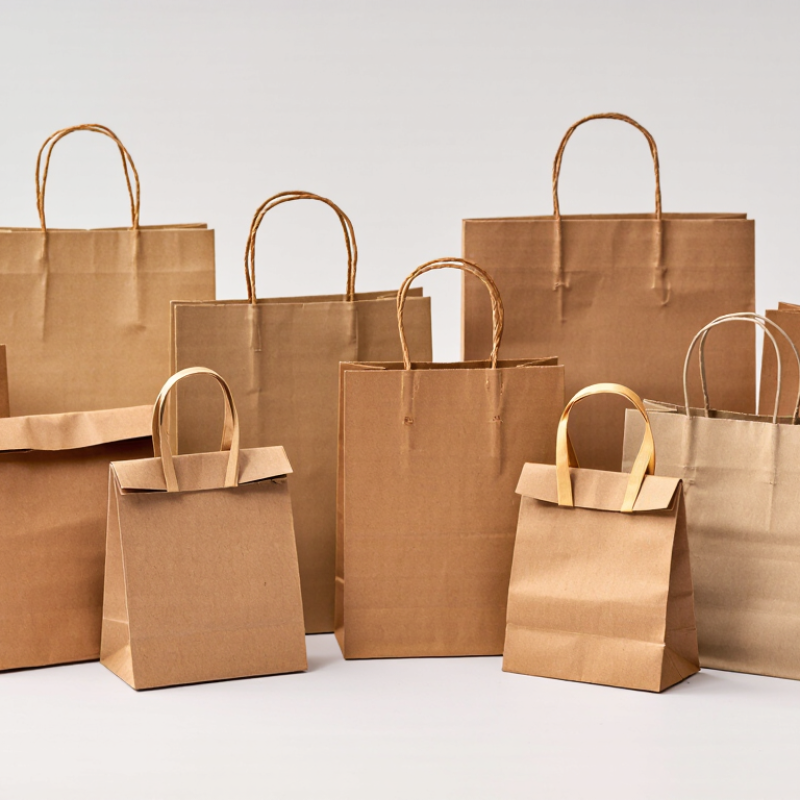
How 70–120 gsm Kraft Paper Grades Shape Wholesale Bag Selection
For wholesale buyers, 70–120 gsm kraft paper offers a useful range for matching bag weight to everyday use. GSM means grams per square metre, but it does not tell the whole story. Paper fibers, recycled content, moisture, and construction can all affect performance.
At around 70 gsm, a brown bag can suit light purchases, takeaway items, or event handouts. It feels flexible and keeps material use modest. Still, a sharp corner or damp product may strain the base. Not ideal for every load. Around 90 gsm, the paper often feels firmer in the hand and may work well for groceries or small retail goods. A reinforced bottom and neatly folded side gussets matter, too.
At 110–120 gsm, bags generally feel more substantial and can better support heavier contents when handles and seams are designed accordingly. The trade-off is higher material use and a stiffer bag that may take more storage space. GSM alone is not a strength guarantee. Ask for samples, check handle attachment, and test bags with the actual products and packing method. A simple weight test helps, but it may miss sharp edges or damp conditions. It is easy to overbuy heavier stock; choosing the right grade takes a little trial and honest review.
Which 10 Brown Bags With Handles Suit Different Retail Load Profiles
A small flat-handle bag suits jewelry, cards, or a single pastry; it keeps material use modest. A medium twisted-handle bag works for books, cosmetics, and everyday counter purchases. For produce or several boxed items, choose a gusseted grocery bag with room to expand. Reinforced handle patches help when customers carry heavier jars, though the paper still needs a realistic load test. Start with the actual products.
A tall, narrow bottle bag helps separate glass containers and limits side-to-side movement. A wide-mouth apparel bag accommodates folded shirts without crushing corners. Shallow handled bakery bags suit pastry boxes that need a broad, stable base. Square-bottom takeaway bags stand more steadily on pickup shelves, especially when packed with several containers. Extra-large handled bags serve bulky household goods, but oversized bags can encourage overloading. A double-ply kraft option adds strength for dense orders and may use more material than lighter retail needs.
Match dimensions to the heaviest typical basket, not just the average sale. Check handle comfort with a full bag, and inspect the base after a short carry test. Small details matter. Paper strength can vary with recycled content, humidity, and construction, so request samples from the intended production run. I would not assume a thicker bag always performs better; handle attachment and bottom construction can matter just as much.
How ISO 536 Grammage and ISO 1924 Tensile Tests Compare Bag Papers
For wholesale buyers comparing brown bags with handles, paper weight is an easy number to request. ISO 536 measures grammage: the mass of paper per square metre, reported in grams per square metre. A higher value often means more material, but it does not automatically mean a stronger bag. Two papers at the same grammage can behave differently because of fibre quality, sheet formation, and manufacturing.
ISO 1924 assesses tensile properties by pulling a paper strip until it stretches or breaks. The results help compare tensile strength and elongation under specified test conditions. Direction matters: paper can perform differently along the machine direction and across it. That distinction matters. A bag’s folds, seams, and handle patches may load the paper in different directions.
For a useful purchasing comparison, ask suppliers for both grammage and tensile results, including the test direction and method used. Check whether samples were conditioned consistently; moisture can affect paper performance. Then inspect finished bags under a realistic load. Look closely at handle attachment points and folded corners, where failures may start. A lab result is valuable, but it cannot reproduce every packing line or delivery route. I would not treat one number as a buying verdict. That is the awkward gap between paper testing and actual bag use.
Top 10 Brown Bags With Handles for Wholesale Buyers - How ISO 536 Grammage and ISO 1924 Tensile Tests Compare Bag Papers
| Bag type |
Typical size (W × gusset × H) |
Typical paper construction |
Indicative grammage (g/m²) |
Handle style |
ISO 536: grammage check |
ISO 1924: tensile check |
| Small retail carrier |
180 × 80 × 220 mm |
Brown kraft paper |
70–90 |
Twisted paper |
Measures paper mass per unit area; useful for verifying the selected paper grade. |
Compare tensile properties in machine and cross directions; paper testing does not test the finished handle attachment. |
| Medium shopping bag |
260 × 120 × 300 mm |
Kraft paper, single ply |
80–100 |
Twisted paper |
Confirms the grammage of representative paper samples, reported in g/m². |
Tensile strength and related properties help compare paper resistance to pulling in each test direction. |
| Large retail carrier |
320 × 140 × 400 mm |
Heavyweight kraft paper |
100–120 |
Twisted paper |
Checks whether paper mass per area is consistent with the chosen heavy-duty grade. |
Use MD and CD results when comparing paper grades; the bag’s seams and handle reinforcements need separate checks. |
| Flat-bottom grocery bag |
300 × 170 × 330 mm |
Kraft paper for groceries |
80–110 |
Flat paper or twisted paper |
Provides a mass-per-area result; it does not by itself indicate carrying capacity. |
Assesses tensile behavior of paper specimens; also evaluate bottom construction and handle bonding on finished bags. |
| Bottle carrier |
180 × 100 × 380 mm |
Reinforced kraft paper |
110–140 |
Twisted paper with reinforcement patch |
Verifies the grammage of the base paper; reinforcement layers should be identified separately. |
Paper tensile results help compare substrate strength, but bottle retention and handle security require finished-bag testing. |
| Takeaway food bag |
260 × 150 × 300 mm |
Food-packaging kraft paper |
70–100 |
Flat paper |
Measures grammage of the paper sample, not grease resistance or food-contact suitability. |
Compares tensile behavior in the two paper directions; moisture and use conditions can affect bag performance. |
| Wide-gusset merchandise bag |
350 × 180 × 320 mm |
Kraft paper, medium-heavy grade |
90–120 |
Twisted paper |
Useful for comparing paper mass per area across supplied lots. |
Tensile strength and elongation-related results can help assess paper response to loading; they are not a direct bag-load rating. |
| Premium boutique bag |
250 × 100 × 300 mm |
Smooth-finish kraft paper |
120–170 |
Rope or twisted paper |
Confirms the selected paper grade’s grammage; surface finish is a separate property. |
Compare tensile results by direction and paper grade; attachment and reinforcement performance require separate evaluation. |
| Extra-large shopping bag |
400 × 180 × 450 mm |
Heavyweight kraft paper |
110–150 |
Twisted paper with reinforcement |
Checks mass per area; a higher grammage alone does not establish bag strength or safe load. |
Use tensile measurements to compare substrate behavior, then confirm capacity with suitable finished-bag tests. |
| Gift bag with broad base |
300 × 120 × 350 mm |
Kraft paper, heavyweight grade |
120–180 |
Rope or twisted paper |
Verifies paper mass per unit area; print, coating, and lamination may affect the finished construction. |
Measures tensile properties of paper specimens; test relevant directions and assess the completed bag separately. |
Note: Grammage ranges and bag dimensions above are indicative examples for common handled kraft-paper bag formats, not universal specifications or guaranteed load ratings. ISO 536 determines paper grammage (mass per unit area). ISO 1924 covers tensile properties of paper and board; results depend on the test method, specimen direction, conditioning, and paper grade. Neither paper test alone certifies the strength of a finished bag or its handle attachments.
How Handle Pull Tests, Gussets, and Dimensions Affect Carrying Capacity
Top 10 Brown Bags With Handles for Wholesale Buyers
A brown bag’s carrying capacity depends on more than paper weight. Handle attachment, gusset depth, and finished dimensions all affect how it performs when loaded. A wide base may hold a takeaway box securely, while a narrow one can tip under the same load. Check the bag with products similar in shape and weight to your customers’ typical purchases. Then inspect the bottom fold and side seams. Small details count. A sample that looks sturdy on a shelf may behave differently after several minutes of carrying.
Tips: Ask suppliers for handle pull-test results and the test method used. Pull strength is useful, but it does not predict every failure. Load a sample, lift it gently, and check for tearing near the handle patches. Repeat with a slightly uneven load.
Compare dimensions carefully: suppliers may list width, gusset, and height in different orders. Confirm which measurements are external and ask for a tolerance range. That detail is easy to miss. For wholesale orders, test several samples from different production batches when possible. Results can vary, and one test is not enough to establish a reliable working limit. Leave a safety margin rather than treating the stated capacity as a target.
How FSC Chain-of-Custody, MOQ, and Carton Costs Guide Bulk Sourcing
For wholesale buyers, a handled brown bag is more than a paper sample. Handle attachment, paper weight, and base width affect how well it holds a real purchase. Ask suppliers for filled-bag photos or a simple load test, not just a flat catalog image. A neat sample can still sag. That detail is easy to miss.
FSC chain-of-custody claims should be supported by traceable documentation. Request current certificate details and check that the product scope covers the paper in your quotation. A logo alone is not proof. Ask whether handles, inks, or other components are included in the claim; the paperwork may not cover every part.
MOQ affects unit price, but it also determines how much stock you must store. Compare quotes using identical bag dimensions, paper grade, handle type, print coverage, and packing method. Then estimate carton cost per usable bag, including carton quantity, dimensions, gross weight, and freight charges. A low unit price may lose its appeal when cartons ship half-empty. Request carton details before approving production. I would still leave room for uncertainty: freight costs and defect rates can change after packing.
Conclusion
Choosing the right Brown Bags With Handles for wholesale orders starts with matching paper weight to the products being carried. Kraft paper in the 70–120 gsm range offers different balances of flexibility, durability, and cost for light retail goods, takeaway items, or heavier purchases. A comparison of ten bag styles can help buyers assess options by load profile, dimensions, and gusset design rather than appearance alone.
Paper performance can be evaluated through grammage measurements under ISO 536 and tensile testing under ISO 1924, while handle-pull tests provide further insight into carrying reliability. Buyers should also consider how bag width, depth, and handle construction affect practical capacity. For bulk sourcing, FSC chain-of-custody documentation, minimum order quantities, and carton dimensions all influence purchasing decisions, storage needs, and delivered cost. Together, these factors support a more informed selection for wholesale use.

 Judi Packaging