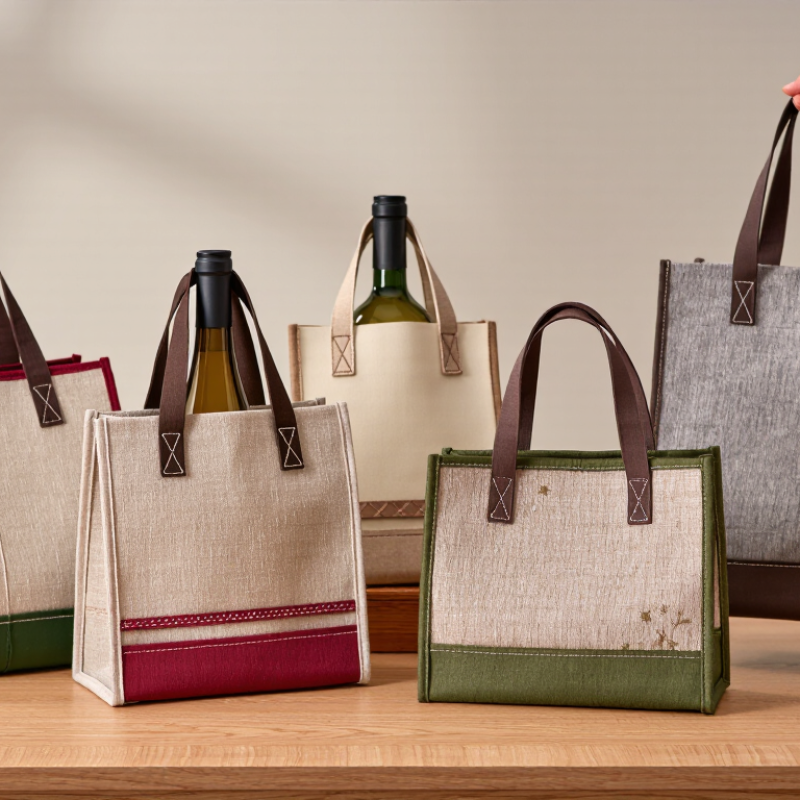
Choosing a reliable China Top Wine Gift Bag Manufacturer requires more than comparing prices. Global buyers need consistent materials, accurate production, and clear communication. A professional supplier should understand bottle dimensions, retail presentation, and international packaging expectations. Our experience covers fabric selection, printing, stitching, and final quality inspection. Each Wine Gift Bag is reviewed for strength, appearance, and practical handling before shipment.
Details matter. A well-made bag should protect the bottle without looking bulky. Cotton, linen, felt, and recycled materials offer different textures and price levels. Strong handles improve carrying comfort, while reinforced seams reduce tearing during transport. Custom logos, colors, labels, and seasonal designs can support different brand identities. Samples remain important. They reveal small issues that digital images cannot show, such as uneven printing or loose threads.
Quality is never a finished idea. Even experienced manufacturers may need to improve a closure, adjust a color, or refine the packing method. That honesty helps buyers make better decisions. Reliable production also depends on documented inspections, stable supplier relationships, and responsive after-sales communication. For distributors, wineries, retailers, and promotional companies, the right manufacturer should provide practical advice rather than empty promises. This guide explores key sourcing points, customization choices, quality controls, and delivery considerations for global buyers seeking dependable wine packaging from China.
A leading wine gift bag manufacturer combines production experience with disciplined quality control. Experienced teams understand how paper weight affects structure, handles, and shipping performance. They test samples before confirming bulk orders. This reduces costly surprises.
Material selection should match the buyer’s market and product position. Recycled paper, cotton, linen, and coated stocks create different textures and price levels. A reliable factory can provide material details, test records, and clear production specifications. It should also explain ink, adhesive, and finishing choices in practical terms.
Small details matter. Handles must feel secure in the hand. Bottle compartments should limit movement during transport. Folded edges need clean alignment, especially under bright retail lighting. A capable manufacturer checks dimensions, color consistency, stitching, and packing methods. Factory audits and inspection photos can improve buyer confidence.
A thoughtful supplier admits weaknesses and records corrective actions. Sometimes a color shifts slightly between sample and production. Sometimes a handle feels strong but looks too thin. These issues require honest communication, not vague promises. Global buyers should review samples, confirm tolerances, and request transparent timelines before placing large orders. Clear documentation and responsive service often reveal more than a polished catalog.
China’s wine gift bag sector benefits from a mature packaging supply chain. Paper mills, textile factories, printing houses, and accessory suppliers often operate within connected manufacturing regions. This reduces coordination time and supports flexible customization. Experienced producers can adjust paper weight, handle length, lining, stitching, and insert design for different bottle shapes.
Small details matter.
The OIV reported global wine production of about 237 million hectolitres in 2023. That volume creates steady demand for transport-ready and presentation-focused packaging. China’s production advantage also comes from process integration. A capable factory can manage artwork checks, color sampling, die cutting, assembly, and final inspection under one production plan. Buyers should request test records, including handle strength, carton compression, colorfastness, and moisture resistance.
Paper weight alone proves little.
Sustainability now influences purchasing decisions. The Smithers packaging industry reports identify recyclable materials and lower-impact production as continuing market priorities. Recycled paper, water-based inks, and FSC-certified inputs can support responsible sourcing, when documentation is available. However, some suppliers overstate these benefits.
That deserves scrutiny.
A gift bag may look premium, yet weak seams can fail beside a reception table. Reliable manufacturers should provide material declarations, sample approval, traceable inspections, and clear production tolerances. Delivery performance still needs measurement, not promises.
For global buyers, wine gift bag selection starts with material, not decoration. In factory sampling, we compare paper weight, handle strength, coating, and folding accuracy. Kraft paper gives a natural look and dependable recyclability. Art paper supports sharper colors and smoother premium finishes. Cotton, linen, and nonwoven options create a softer presentation. Each material behaves differently around bottle weight and moisture. That detail matters.
Styles can be matched to the occasion and shipping method. A single-bottle vertical bag suits retail shelves and compact cartons. Two-bottle designs need reinforced bases and wider gussets. For corporate events, ribbon handles and foil details add visual impact. For outdoor tastings, laminated surfaces resist light splashes, but they are not waterproof. This distinction is often missed. Buyers should request a physical sample before approving bulk production.
Customization may include size, die-cut windows, rope or paper handles, printing, inserts, and hang tags. Accurate bottle measurements prevent loose necks and tilted packaging. Color matching should use approved references, since screens can mislead. A reliable manufacturer also checks print alignment, edge finishing, and load-bearing performance. We recommend pre-shipment inspection records with photos and measured tolerances. Still, perfection is not guaranteed. A small crease or shade variation can appear, especially with handmade finishes. Clear specifications and realistic acceptance standards make the final order more dependable.
For global buyers, a wine gift bag manufacturer must prove more than attractive design. Quality begins with controlled materials, accurate cutting, and consistent stitching. Each production batch should receive incoming inspection before assembly. Teams can check paper weight, fabric strength, handle attachment, print clarity, and odor. A practical load test should simulate a filled bottle, not an empty display sample. Small details matter.
Sustainability requires evidence, not vague promises. Manufacturers should offer recycled paper, responsibly sourced fibers, water-based inks, and reduced-plastic packaging where suitable. Material records and supplier documents improve traceability. Manufacturing systems aligned with recognized quality standards, such as ISO 9001, can strengthen process control. However, certificates alone do not guarantee reliable output. A factory may still miss a loose thread or uneven fold. Honest inspection reports and corrective actions build greater trust.
Tips: Request a pre-production sample, material specifications, and recent inspection records. Ask how defects are classified and corrected. Clarify packaging, moisture protection, and testing methods before placing an order. Visit the facility when possible, or use an independent inspection service. A clear tolerance guide prevents costly disagreements. Perfection is difficult. Continuous review is more credible.
Global buyers choosing wine gift bags usually begin with product protection, not decoration. A reliable manufacturer should provide clear material details, size charts, handle strength data, and packaging information. Buyers often request samples before approving bulk production. This reveals loose stitching, weak paper layers, or color differences early.
Import planning also requires practical communication. Confirm the bottle size, bag dimensions, quantity per carton, carton weight, and shipping marks. Ask for commercial invoices, packing lists, and other documents required by your destination. Customs classification and labeling rules may differ by country, so buyers should verify them with local authorities or a qualified customs professional. Do not rely on attractive sustainability claims alone. Request evidence for recycled content, certifications, and disposal guidance. Small details matter.
Tips: Send a real bottle or accurate measurements for sampling. Check the bag after repeated lifting. Compare the approved sample with the production batch. Confirm the agreed trade terms and delivery schedule in writing. Leave time for inspections and unexpected port delays. One missed detail can affect hundreds of cartons. We have seen buyers focus heavily on printing, then discover that the handles feel uncomfortable. That mistake is easy to avoid, but it still happens. A thoughtful supplier should welcome questions, explain limitations, and report production issues honestly. Reliability is shown through records, testing, and consistent communication, not promises alone.
This chart presents indicative planning durations commonly considered by international buyers when sourcing wine gift bags from China. Product sampling and approval typically take about 10 days, production about 25 days, ocean freight about 35 days, and customs clearance and documentation about 7 days. Actual timing varies by order quantity, customization, shipping route, season, and destination-country requirements.
Kraft paper offers a natural appearance and dependable recyclability. Art paper gives sharper colors and smoother finishes. Cotton, linen, and nonwoven fabrics feel softer. Each material handles weight and moisture differently.
A vertical bag suits one bottle and compact cartons. Two-bottle bags need reinforced bases and wider gussets. Ribbon handles and foil details suit formal events. Laminated surfaces resist small splashes, but they are not waterproof.
Options include bag size, printed artwork, handles, inserts, hang tags, and die-cut windows. Accurate bottle measurements prevent loose necks. Screen colors can mislead, so approve a physical color reference.
A sample reveals weak handles, loose stitching, tilted bottles, and color differences. Test it with a filled bottle. Empty samples can look convincing. They prove very little.
Checks should cover material weight, fabric strength, handle attachment, print clarity, odor, and folding accuracy. Load testing should simulate a filled bottle. Inspection records should include photos and measured tolerances.
Request evidence for recycled content, responsibly sourced fibers, water-based inks, and reduced-plastic packaging. Supplier records improve traceability. Certificates help, but they do not guarantee perfect production. A loose thread may still appear.
Confirm bottle dimensions, bag size, carton quantity, carton weight, shipping marks, and delivery timing. Ask for invoices, packing lists, and destination-specific documents. Local customs guidance may be necessary.
Approve specifications and acceptance tolerances in writing. Compare the approved sample with the production batch. Leave time for inspection and port delays. One missed detail can affect hundreds of cartons.
Handmade finishes may show a small crease or slight shade variation. Perfect consistency is difficult. Clear defect categories prevent arguments. Still, repeated lifting should not cause handle failure.
China has become a major source for buyers seeking reliable and versatile wine packaging solutions. A leading Wine Gift Bag manufacturer combines experienced production teams, efficient supply chains, modern equipment, and strong communication with international customers. Chinese manufacturers can produce bags in various materials, including paper, cotton, linen, nonwoven fabric, and reusable specialty textiles. Buyers can also select from different sizes, handles, closures, colors, printing methods, and decorative finishes to match seasonal promotions, corporate gifting, retail presentation, or special events.
Consistent quality depends on responsible material sourcing, accurate printing, careful stitching, protective packaging, and strict inspection at every production stage. Many factories are also improving sustainability through recyclable materials, reduced packaging waste, reusable designs, and more efficient manufacturing processes. For global buyers, choosing the right supplier involves reviewing samples, customization capabilities, production capacity, quality procedures, certifications, lead times, shipping arrangements, and import documentation. A clear understanding of product requirements and international trade responsibilities helps buyers build dependable cooperation and receive wine gift bags that meet both market expectations and applicable regulations.

Judi Packaging