How to Choose Gift Wrap Paper Bags in 2026

Time:2026-09-28 Author:Aria
0%

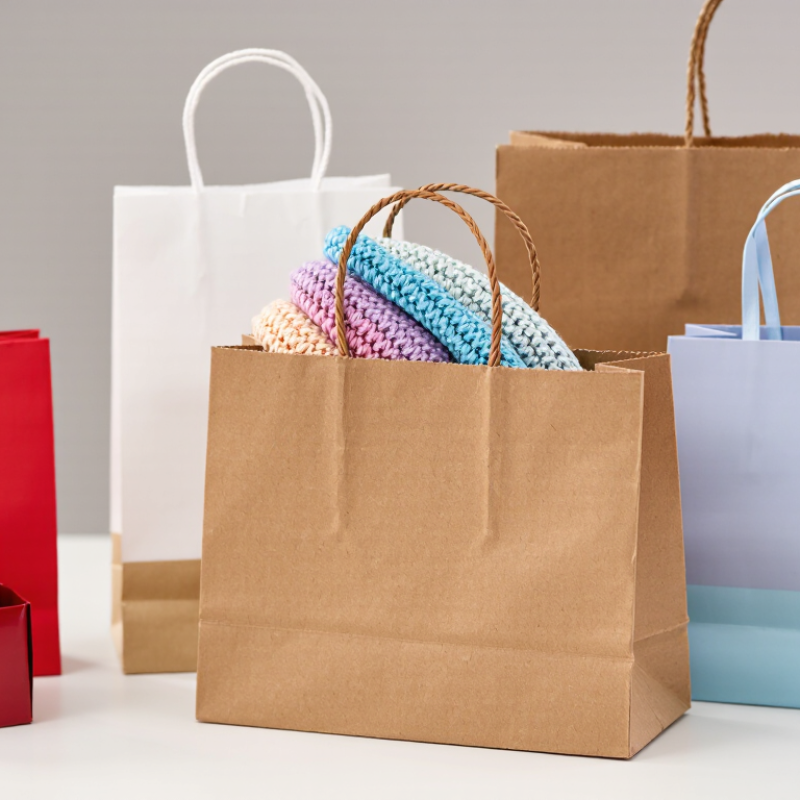
Choosing a Gift Wrap Paper Bag in 2026 is less about picking the prettiest print and more about matching the bag to the gift, occasion, and recipient. A glossy red bag may look festive beneath warm shop lights, but a matte kraft finish can feel more personal for handmade gifts. Size matters, too. A candle should sit securely without tipping, while a soft scarf needs enough room to fold without forcing the handles apart.

Start with practical details: check the bag’s dimensions, handle attachment, paper thickness, and stated weight capacity. If the gift is heavy or has sharp corners, a reinforced base can help prevent sagging. For gifts that may meet rain or damp hands, remember that ordinary paper can stain or weaken. A protective coating may help, though it can affect how easily the bag is recycled. Small details matter.

Material claims deserve a closer look. Terms such as “recyclable” or “responsibly sourced” are most useful when the seller explains what they mean and provides supporting information. Compare those details with local recycling guidance rather than assuming every paper bag belongs in the same bin. Consider print coverage, coatings, and whether the recipient is likely to reuse the bag. That can disappoint. A beautifully decorated bag may not suit someone who values simple, low-waste packaging. This guide explores how to balance appearance, durability, cost, and material choices, so your bag feels thoughtful before the gift is even opened.
How to Choose Gift Wrap Paper Bags in 2026

Identify the Gift, Recipient, and Occasion Requirements

Choosing a paper gift bag starts with the gift, not the pattern. Measure its width, height, and depth, then allow room for tissue paper and handles. A ceramic mug needs a stable base; a flat book needs less depth. A scarf can disappear in an oversized bag. Small details matter.

The recipient matters just as much. A child may enjoy bright colors, while a colleague may prefer a quiet design and a simple message. Consider how the bag will be carried: paper handles suit lighter gifts, while reinforced handles offer better support for heavier items. I still get this wrong sometimes. A beautiful bag can be awkward to hold.

The occasion helps set the tone and budget. The National Retail Federation’s 2024 Mother’s Day Consumer Survey projected $33.5 billion in total spending, with celebrants planning an average of $254.04. Its 2024 holiday survey found shoppers planned to spend an average of $902, including $641 on gifts. These figures do not prescribe a bag style, but they show how varied gift budgets can be. For a formal milestone, choose a neat finish and a size that hides the gift. For a casual gathering, a simple bag may be enough. Check the fit before adding decorations; extra tissue cannot fix a bag that is too small.

Compare Paper Types, Weights, and Protective Features

How to Choose Gift Wrap Paper Bags in 2026
Compare Paper Types, Weights, and Protective Features

Start with the paper itself. Kraft paper has a natural, slightly textured finish that suits simple wrapping and hides small scuffs. Smooth coated paper gives colors a sharper look, but its surface may show creases. Recycled paper can vary in texture and shade, so check a sample if appearance matters. Feel the bag, too.

Weight affects how a bag holds up. Around 80–100 gsm often works for light gifts, while 120–170 gsm can offer more structure for books, jars, or layered clothing. These ranges are guides, not guarantees. A thick bag can still fail if its base folds are weak or its handles are poorly attached. Test the actual contents: a glass jar shifts differently from a soft scarf. A moisture-resistant finish may help with brief contact with damp hands, but it is not waterproof. Coatings can also affect local recycling options, so check disposal guidance where you live.

Tips: Place the gift inside and lift the bag by both handles. Look for a sagging base, strained handle joints, or paper that buckles at the corners. If the fit feels tight, choose a wider bag; a perfect-looking sample can be less practical once filled.

How to Choose Gift Wrap Paper Bags in 2026 - Compare Paper Types, Weights, and Protective Features
Paper Type Typical Paper Weight Appearance and Feel Protection and Limitations Suitable Uses Selection Notes
Kraft paper About 70–120 g/m² for many shopping and gift bags Natural, matte, and often fibrous; commonly available in brown and white. Offers practical tear resistance for everyday carrying when the bag is properly constructed. Paper is not waterproof, and untreated surfaces can absorb moisture. Everyday gifts, books, clothing, and general retail packaging. Choose a heavier grade, reinforced base, or stronger handles for heavier items. Weight alone does not determine carrying capacity.
Coated art paper About 128–210 g/m² for commonly used bag papers Smooth, bright, and suitable for detailed printing; coatings may create a gloss or matte finish. A surface coating can improve resistance to scuffs and light splashes, depending on the coating. It does not make the bag waterproof; edges and the interior can still take up moisture. Presentation gifts, cosmetics, accessories, and printed retail bags. Check whether the coating is on one or both sides and whether it affects recyclability in the intended local collection system.
Recycled paper Commonly about 80–150 g/m², depending on the bag design and recycled content May have a natural, slightly flecked, or less uniform appearance; finish varies by grade. Protection depends on the paper grade, construction, and handles—not simply on recycled content. Like other paper bags, it is vulnerable to prolonged moisture. Everyday gifts and packaging where recycled fiber content is a purchasing priority. Ask for the stated recycled-content percentage and verify any environmental certification or claim independently.
Textured or specialty paper Often about 100–180 g/m²; varies substantially by texture and finish May be embossed, laid, linen-like, or otherwise tactile, with a distinctive premium appearance. Texture is primarily decorative and does not necessarily add strength or moisture protection. Deep embossing or surface treatments can affect folding and printing. Small gifts, invitations, boutique-style presentation, and special occasions. Request a sample to check color, texture, fold quality, and print legibility before ordering.
Laminated paper Paper stock commonly about 128–200 g/m², plus a thin laminate layer Can have a glossy or matte surface with a smooth, finished appearance. The laminate can help resist light surface moisture and scuffing, but seams, handles, and the opening remain potential weak points. Lamination can make recycling more difficult where material separation is unavailable. Presentation bags and gifts that may be handled frequently. Confirm the laminate material and local disposal options; do not treat the bag as suitable for wet conditions.
Uncoated specialty paper About 90–160 g/m² for many decorative bag applications Matte, absorbent, and often well suited to writing, stamping, or understated printing. Usually offers little resistance to water or oily marks. Heavier stock and reinforced construction can improve handling strength. Handmade gifts, dry goods, and bags intended for a natural, low-gloss look. Consider an inner wrap for delicate or mark-sensitive items; test printed colors because absorbent papers may affect their appearance.
How to compare options Compare the stated paper weight in g/m², but do not use it as the only strength measure. Review a physical sample under the lighting in which the bag will be presented. Check the base reinforcement, handle attachment, seams, coating, and any stated load test. Capacity depends on the complete bag construction. Match the bag to the gift’s size, weight, shape, and expected handling conditions. For food or other regulated uses, confirm that the paper and any coating are suitable for the intended contact and comply with applicable local requirements.

Choose the Bag Size, Shape, and Handle Style

For gift wrap paper bags, start with the item’s widest point, height, and depth—not its label. Leave roughly 2–4 cm of clearance around boxed gifts, so corners slide in without crushing tissue. A flat-bottom rectangular bag suits books, candles, and small boxes. Bottles need a taller, narrower shape, ideally with a reinforced base. Measure the packed gift, not just the product; ribbon and protective wrapping add bulk.

Smithers’ 2023 paper-packaging market report projected growth from $417.3 billion in 2023 to $503.4 billion by 2028. This broad market forecast does not prescribe bag dimensions, but it underlines how common paper packaging has become. Fit still matters. A bag that is much too large wastes material and lets gifts shift; one that is too tight strains seams. I still find tall jars awkward: a wide bag can fit the jar but look poorly proportioned.

Choose handles for the load and how the recipient will carry it. Twisted-paper handles work for light gifts; flat paper handles feel steadier for medium-weight boxes. For heavier items, check handle attachment and base reinforcement with a filled sample. Pull gently. If the top edge buckles or the handle tilts, choose a stronger construction. Cord handles can feel comfortable, but their attachment points need careful inspection. Short handles suit hand-carrying; longer ones can slip over a wrist or shoulder, though they may swing into nearby objects.

Assess Design, Reusability, and Environmental Claims

When choosing gift wrap paper bags in 2026, treat design as more than a pretty surface. Look at the bag under ordinary room light, not only in a polished product photo. A glossy coating may catch attention, yet it can complicate recycling where paper and plastic layers are difficult to separate. Check the handles, too: twisted paper feels secure for a small candle, while flat handles may sit better against a book. Choose dimensions that fit the gift without excessive empty space. Small detail, big difference.

Reusability depends on construction, not just a “reusable” label. Feel the base and seams; thin paper can tear when someone carries a jar or several wrapped items. A reinforced bottom, sturdy handles, and a useful size can give the bag another outing. Still, reuse is not guaranteed. A recipient may not need another bag, and that matters more than optimistic packaging language. I sometimes focus too much on attractive patterns; a plain bag that folds flat may be kept longer.

Read environmental claims closely. Look for measurable details, such as recycled-fiber content, whether the bag is uncoated, and how to dispose of it locally. “Eco-friendly” alone says little; check whether the claim refers to the paper, printing, handles, or whole bag. Recyclability varies with local collection rules and attached materials, so verify guidance rather than assuming every paper bag belongs in the bin. That uncertainty is easy to miss.

Check Quality, Price, and Supplier Reliability

How to Choose Gift Wrap Paper Bags in 2026

Check the bag itself before comparing quotes. Feel the paper, inspect the glued seams, and look closely at where each handle attaches. A gentle pull can reveal loose fixing or uneven folds. Test a sample with the weight you plan to carry; an empty bag tells you little. I would not treat a glossy finish as proof of strength. That is an easy mistake. Ask whether the paper weight, dimensions, handle type, and print finish will match the production order.

Price needs context. Compare the cost per usable bag, not just the unit price. Include sample fees, printing, packaging, shipping, and any minimum order quantity. A low quote may come with a long lead time or unclear specifications. Request a written quotation and a sample before approving a large run. Even then, samples can be better finished than bulk orders, so ask how production quality is checked.

Tips: Ask the supplier to confirm delivery dates and replacement terms in writing. Check how quickly they answer specific questions, not just how warmly they respond. Keep a signed sample for comparison when the order arrives. If details feel uncertain, pause and clarify them; it may cost a little time now, but usually less than reordering.

How to Choose Gift Wrap Paper Bags in 2026

Suggested buyer-set weighting for comparing quality, price, and supplier reliability. These are planning weights, not results from a market survey.

How to use it: Check paper weight, handle strength, print consistency, and sample quality. Compare prices on the same bag size, material, and order quantity, including shipping and setup costs. Assess supplier reliability using written lead times, sample approval, quality-control procedures, and clear replacement terms. Adjust the weights to fit your order.

FAQS

What should I check when choosing a gift wrap paper bag?

Check its size, handles, seams, and finish in ordinary room light. A polished photo can hide small flaws.

How can I tell if a bag can carry my gift?

Test a sample with a similar weight. A jar or thick book can reveal weak handles or a thin base. An empty bag tells little.

Do glossy bags always recycle easily?

No. Glossy coatings may combine paper and plastic layers that are difficult to separate. Check local disposal guidance. Easy to miss.

What makes a gift bag more likely to be reused?

A reinforced base, sturdy handles, and a useful size can help. But the recipient may not need another bag.

What environmental claims should I look for?

Look for details about recycled-fiber content, coatings, and disposal. “Eco-friendly” alone does not explain which parts of the bag it describes.

How should I compare bag prices?

Compare the cost per usable bag. Include samples, printing, packaging, shipping, and minimum order requirements. A low unit price may hide extra costs.

What should I confirm before approving a large order?

Get the paper weight, dimensions, handle type, print finish, and delivery date in writing. Keep a signed sample for comparison.

Can a sample guarantee that every ordered bag will match?

Not completely. Samples may be better finished than bulk production. Ask how quality is checked, though I sometimes forget to ask this early enough.

Conclusion

Choosing the right Gift Wrap Paper Bag in 2026 starts with the gift, the recipient, and the occasion. Consider whether the bag needs to hold a lightweight keepsake or a heavier item, and choose paper type and weight accordingly. Protective features, such as a reinforced base or a suitable lining, can help keep gifts secure. Check the bag’s dimensions, shape, and opening to ensure the gift fits comfortably, then select a handle style that is easy to carry and appropriate for the setting.

Appearance and practicality matter too. Choose a design that suits the occasion, and consider whether the bag is sturdy enough to be reused. Review environmental claims carefully and look for clear information about materials and recyclability rather than relying on vague wording. Before buying, inspect construction details, compare prices in relation to quality, and assess whether the supplier provides consistent product information and dependable service. These steps can help you find a bag that is attractive, functional, and suited to your needs.

Aria

Aria

Aria is a dedicated marketing professional with a deep passion for innovative strategies and a keen understanding of our company's product offerings. With a wealth of experience in the industry, Aria excels at crafting engaging content that highlights the unique features and benefits of our......