Choosing the right Wine Bottle Bag supplier requires more than comparing catalog prices. Global buyers must examine material quality, production capacity, customization options, and delivery reliability. A bag may look attractive online, yet feel weak when carrying a heavy glass bottle. Practical evaluation matters.
This guide reviews leading suppliers from a buyer’s perspective. It considers cotton, jute, felt, paper, and recycled fabric options. It also examines stitching strength, handle comfort, bottle protection, printing accuracy, and packaging consistency. Reliable suppliers should provide clear samples, realistic production timelines, and transparent minimum order quantities. They should also support responsible sourcing and comply with applicable packaging, labeling, and import requirements.
Small details often reveal major differences. Check whether the bottle sits firmly inside the base. Ask for photos of inner seams and packed cartons. Confirm color standards before approving bulk production. A strong supplier communicates quickly when problems appear, rather than hiding them. That matters during peak holiday seasons.
No supplier is perfect. Even an experienced manufacturer may face fabric shortages, delayed shipping, or inconsistent dye lots. Buyers should plan alternatives and record every specification in writing. This review aims to compare suppliers fairly, using practical purchasing factors instead of impressive claims alone. The best choice depends on market needs, order volume, budget, and brand positioning. A low price is not always a lower risk.
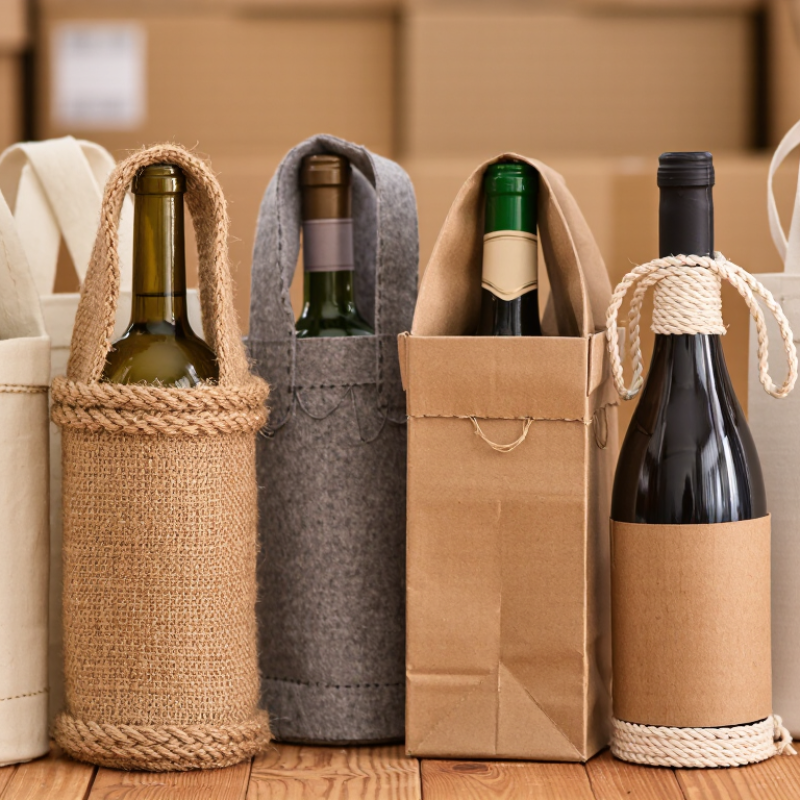
A reliable wine bottle bag supplier proves performance beyond attractive samples. The International Organisation of Vine and Wine estimated 2024 global wine production at 225.8 million hectolitres. That scale demands stable capacity, not occasional excellence. A capable supplier should provide production records, material specifications, and realistic lead times. Ask for pre-production samples. Check the stitching, handle attachment, lining, and base strength by hand.
Testing should match actual delivery conditions. Request drop testing with a filled bottle, seam-strength results, moisture resistance, and colorfastness data. Packaging components should also be traceable by batch. ISO 9001 certification can support process control, but certification alone is not proof of good workmanship. I have seen suppliers present polished documents while weak handles failed during routine carrying. Small details matter.
Environmental evidence deserves equal scrutiny. UNEP’s 2023 Turning off the Tap report states that plastic pollution could be reduced by 80% by 2040 through reuse, recycling, and redesign. A responsible supplier should explain fiber content, coatings, adhesives, and disposal routes clearly. Avoid vague claims such as “eco-friendly.” Request test reports instead. Recycled material may vary in color and strength. That is easy to overlook. A dependable partner admits these limits, proposes adjustments, and records approval samples before mass production. Mistakes can still happen, but hidden mistakes are far more expensive.
A reliable supplier shows stable production capacity, clear specifications, and realistic lead times. Ask for production records and pre-production samples. Check the stitching, handles, lining, and base by hand. Attractive samples alone prove very little.
Cotton and canvas offer a sturdy, reusable feel. Jute creates a rustic texture but may shed fibers. Recycled polyester resists moisture and supports detailed printing. Paper works well for short-term gifting. Each material has limits.
Request drop testing with a filled bottle. Review seam-strength, moisture-resistance, and colorfastness results. Lift a filled sample repeatedly. Check whether the handles twist, stretch, or loosen. Small failures become expensive later.
A wider base helps the bag stand on counters. A divider reduces contact between two bottles. Soft ribbon handles may feel more comfortable. Drawstrings can improve presentation. Some decorative designs sacrifice strength. That trade-off needs testing.
Request a valid quality-management certificate for the actual production site. Check its scope, expiry date, and certification body. For recycled fibers, request chain-of-custody records. Ask for batch inspection photos and corrective-action reports. Paperwork is useful, but it is not workmanship.
Request reports covering colorfastness, odor, restricted substances, and heavy metals. Testing should cover the finished bag, not only its fabric. Printed materials may need ink safety information. Requirements can differ by destination market. Do not assume.
Ask suppliers to explain fiber content, coatings, adhesives, and disposal routes. Avoid vague claims such as “eco-friendly.” Request test reports and supporting records. Recycled materials may vary in color and strength. That variation is easy to overlook.
Confirm dimensions using the actual bottle shape. Review fold lines, storage space, and moisture exposure. Check natural-fiber odor before distribution. Approve a physical sample before mass production. I may still miss something. Repeat testing helps reveal uncomfortable truths.
Choosing the right Wine Bottle Bag supplier is essential for global buyers seeking reliable quality, attractive design, and consistent delivery. A dependable supplier should offer clear communication, stable production capacity, strict quality control, and experience handling international orders. Buyers can compare options by reviewing available materials, such as cotton, jute, non-woven fabric, paper, or recycled textiles, as well as designs including single-bottle bags, multi-bottle carriers, drawstring closures, handles, insulation, and customized printing.
Before placing an order, buyers should check relevant certifications, material safety documentation, testing procedures, and environmental standards. Pricing should be evaluated together with customization fees, minimum order quantities, packaging, shipping costs, lead times, payment terms, and after-sales support. A supplier offering transparent quotations and flexible order terms can help reduce purchasing risks and improve supply planning. By assessing product performance, production capabilities, compliance documents, and total landed cost, global buyers can select a Wine Bottle Bag partner that supports both brand presentation and long-term business needs.

 Judi Packaging