Choosing the right Wine Bottle Carrier involves more than matching a color to a label. It requires attention to protection, capacity, comfort, materials, and presentation. A carrier should keep bottles stable while moving through a busy market, restaurant, wedding venue, or airport lounge.
The International Organisation of Vine and Wine reported approximately 237 million hectolitres of global wine production in 2023. It estimated worldwide consumption at about 221 million hectolitres, showing how significant wine distribution remains. Every bottle needs safe handling before it reaches the table. A weak handle, loose divider, or poorly cushioned base can turn a short walk into an expensive accident.
Packaging choices also deserve closer thought. The Sustainable Packaging Coalition has repeatedly emphasized practical design, material efficiency, and end-of-life planning in responsible packaging. Meanwhile, consumer research from IWSR highlights continuing interest in convenience, premium experiences, and sustainable choices across beverage markets. These trends make a reusable, well-designed carrier increasingly valuable.
But data does not choose a carrier for every buyer. A six-bottle canvas bag may suit a picnic, while a padded two-bottle carrier may work better for gifting. I may be overconfident about “universal” solutions; bottle shapes and travel conditions vary more than product descriptions suggest. Small details matter. This guide presents seven practical tips for comparing Wine Bottle Carrier options, with attention to real handling, bottle security, user comfort, and responsible material choices. It also encourages a final question: will the carrier still perform after repeated use, not just look attractive in a product photograph?
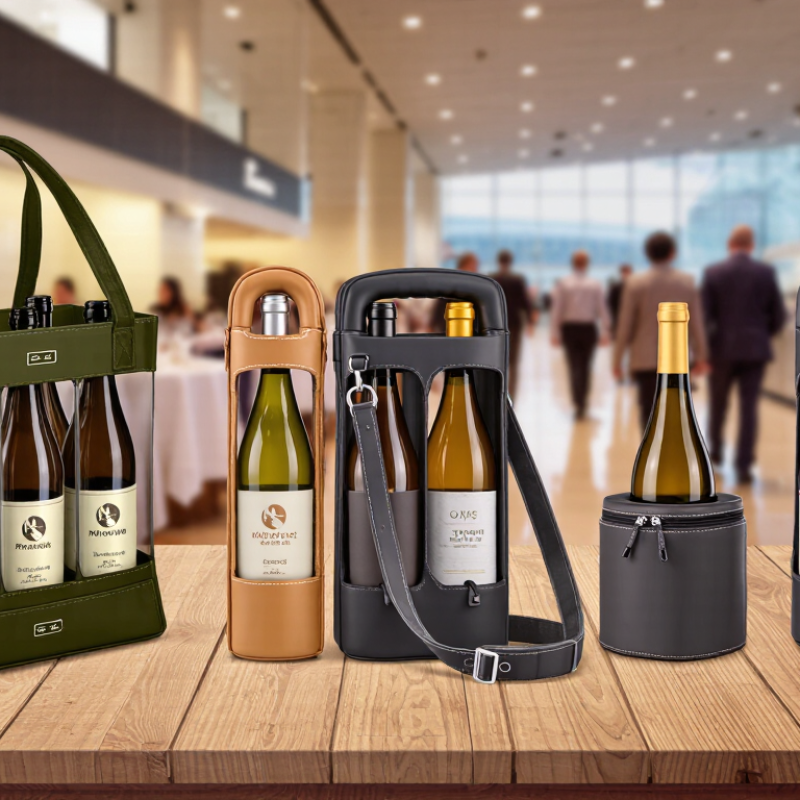
7 Tips for Choosing the Best Wine Bottle Carrier?
Define the Use Case and Confirm the 750 mL Standard Wine Format
A bottle carrier should begin with the occasion, not its color or extra pockets. A single bottle for dinner needs different protection from six bottles for a tasting event. For short car trips, a padded sleeve and stable base may be enough. For walking, choose reinforced handles, balanced weight, and a closure that will not loosen. If the carrier will enter checked luggage, inspect its seams, dividers, and impact protection carefully. I once chose a stylish carrier with thin walls. The bottle survived, but the carrier did not. That mistake changed my checklist.
The 750 mL bottle is the common wine format, but “standard” does not mean identical. Bottle height, shoulder shape, diameter, and glass weight vary by style. Many bottles measure roughly 300 to 330 millimeters tall and 75 to 85 millimeters wide. Exceptions are common. Measure twice. Check internal dimensions, not only advertised capacity. A narrow opening may fit the body while squeezing the shoulder. That matters.
Place an empty bottle inside before purchase, if possible. Confirm that the base sits flat and the closure secures the neck or body. Test the handle with similar weight, because comfort changes after several minutes. For temperature-sensitive transport, add a removable insulated layer. Leave room for cushioning. My preference has shifted toward simpler carriers; fewer compartments make fit easier to verify. A perfect-looking design can still fail when the bottle is slightly taller.
| Tip | Primary Use Case | Recommended Carrier Format | Typical 750 mL Bottle Fit | Useful Capacity Guidance | Selection Check | Why It Matters |
|---|---|---|---|---|---|---|
| 1 | Home storage and short-distance transport | Compact 1–2 bottle carrier with a rigid base | Designed around bottles approximately 29–31 cm tall and 7.5–8.5 cm in diameter | Allow about 1–2 cm of clearance around each bottle | Check that the bottle sits upright without leaning or sliding | A close fit reduces movement and helps protect the glass during ordinary carrying. |
| 2 | Picnics, outdoor events, and casual gatherings | Insulated carrier with a washable interior and shoulder strap | Verify compatibility with standard 750 mL bottles before adding insulation | A 2-bottle carrier is often easier to keep stable than an overfilled larger bag | Look for leak-resistant lining, padded dividers, and a secure closure | Outdoor use increases exposure to impact, moisture, heat, and uneven surfaces. |
| 3 | Gifting one or two bottles | Presentation carrier with reinforced handles and a protective divider | Measure the actual bottle diameter, especially when using broad-shouldered bottles | Use a carrier with at least 30 cm internal height for most standard bottles | Confirm that handles remain comfortable when carrying approximately 1.5–3 kg | A full 750 mL bottle commonly weighs more than 1 kg, so handle strength matters. |
| 4 | Car travel and commuting | Structured carrier with anti-tip support and individual compartments | Each compartment should hold one bottle securely without excessive side play | Choose 2–6 compartments according to the available floor or trunk space | Check the carrier’s external dimensions against the vehicle’s storage area | A low center of gravity and separated bottles help reduce rolling and bottle-to-bottle contact. |
| 5 | Air travel or checked luggage | Impact-resistant bottle protector with shock-absorbing padding | Use a protector that encloses the bottle body, shoulders, neck, and closure | Allow additional space for protective padding and a leak-containment layer | Review current airline, customs, and destination-country requirements separately | Baggage may be dropped or compressed; ordinary fabric totes are not sufficient protection. |
| 6 | Retail display, events, or repeated handling | Reusable multi-bottle carrier with reinforced panels and replaceable dividers | Confirm consistent compartment dimensions for the intended bottle assortment | Common practical layouts include 6 or 12 standard 750 mL bottles | Check total loaded weight, stitching, base construction, and cleaning requirements | Repeated use places greater stress on seams, handles, dividers, and the bottom panel. |
| 7 | Mixed bottle sizes or specialty wine formats | Adjustable carrier with removable dividers and flexible internal sizing | Treat the 750 mL bottle as the baseline, then verify height and diameter variations | Do not assume a carrier for standard bottles will fit magnums, sparkling bottles, or unusually wide shapes | Measure the tallest and widest bottle in the collection before purchasing | Bottle shape varies even when volume is identical, so capacity alone does not guarantee compatibility. |
Choosing a wine bottle carrier starts with its material, not its appearance. In my packing tests, paper carriers felt light, printable, and easy to recycle when clean. Yet damp hands can weaken their seams. Choose reinforced paper for short trips, indoor events, and lighter bottles. Tip: Check the base. A loose fold is a warning.
Fabric carriers offer a softer grip and better reuse. Cotton and nonwoven fabrics handle repeated errands, though thin handles can cut into your fingers. Plastic carriers resist rain and sudden spills, making them practical for outdoor transport. However, thickness, closure strength, and reuse potential matter more than a glossy finish. I once selected a cheap plastic sleeve that stretched after one heavy bottle. That mistake changed my inspection routine. Tip: Lift a filled carrier for ten seconds before buying.
Molded-pulp carriers provide firm compartments and strong shock absorption. They suit gift presentation, delivery, and bottles that must stay separated. Their rigid shape uses more storage space, while moisture can soften untreated pulp. Ask whether the carrier includes recycled fiber and whether local facilities accept it. Material claims deserve verification. Tip: Press the divider gently. It should flex slightly, not collapse. I still test every carrier with real bottles before trusting it.
A wine bottle carrier should be chosen by bottle dimensions, not attractive photos. A standard 750 mL bottle usually fits most compartments, but shapes vary widely. Tall bottles may need extra height. Broader bottles can strain narrow pockets. Measure the bottle diameter and height, including the foil and cork area. A carrier labeled for six bottles may only fit six standard bottles. It may not hold six magnums.
Magnums need stronger construction and more space. One 1.5-liter bottle is heavier and wider than a standard bottle. Check the carrier’s internal measurements, divider width, and weight rating. For mixed-size loads, adjustable dividers are useful. They can separate two magnums from smaller 750 mL bottles. Padding should prevent glass from touching glass. A firm base also keeps bottles upright during stairs, car travel, or uneven floors. Test the handles with a realistic load before regular use.
Material quality matters. Look for reinforced stitching, secure closures, and a surface that wipes clean. Insulation helps when temperature control is important, but it cannot replace proper storage. I once selected a narrow six-bottle carrier because its exterior looked spacious. Standard bottles fit, yet the heavier glass pressed against the seams. That choice was mine, not the product’s fault. Now I check internal dimensions and carry weight together. A carrier may hold the bottles physically, but still feel unsafe when lifted. Small clearance is worth paying attention to.
A stylish wine bottle carrier is not automatically a protective carrier. Check the bottle fit, divider strength, closure, and cushioning before judging its appearance. A carrier should hold each bottle firmly, without squeezing the glass or allowing side-to-side movement. Small gaps can become serious problems during transport.
Ask whether the complete packed carrier was tested under ISTA 3A or ASTM D4169. ISTA 3A is useful for parcel delivery conditions, including repeated drops and vibration. ASTM D4169 applies selected distribution cycles and assurance levels to packaged products. Neither protocol is a permanent safety certificate. The test must match the actual bottle size, carrier materials, shipping method, and package weight. Otherwise, the result may look impressive but provide limited evidence.
Test the exact shipping configuration. Use the real bottle, divider, inserts, outer carton, and closure. Condition the package for temperature and humidity when the route requires it. After testing, inspect the bottle neck, base, seams, and divider corners. Look for movement, scuffing, compression, and hidden glass damage.
Ask for the laboratory report, test sequence, drop heights, vibration settings, and failure criteria. A vague “passed” statement is not enough.
One practical weakness is relying on a single sample. Materials vary, and assembly errors happen. Repeat testing with production samples, then review weak points honestly before approving the carrier.
Choosing the best wine bottle carrier requires more than checking its appearance. Evaluate seven practical points: durability, bottle fit, handle comfort, reusability, FSC sourcing, recyclability, and EU packaging compliance.
A strong carrier should hold bottles upright during a short walk or a crowded train ride. Test the base with full bottles, then inspect seams, handles, and closures. Reusability depends on real performance. A carrier that collapses after two uses is not sustainable. Look for washable surfaces, replaceable parts, and sturdy stitching. Ask suppliers for test methods and expected reuse cycles. Some claims sound impressive but remain vague.
FSC sourcing helps confirm that paper or board comes from responsibly managed forests. Request a valid certificate and chain-of-custody information, not only a printed logo. Also check recycled content and whether inks, coatings, and adhesives affect recycling. EU packaging requirements can involve material composition, labeling, recyclability, and producer documentation. Confirm the current rules for each target market, especially under evolving EU packaging legislation. Keep technical files and supplier declarations accessible. This matters during audits.
Do not judge sustainability by weight alone. A thin carrier may use less material but tear quickly. I have found that practical trials reveal weaknesses that product sheets hide. Compare empty storage space, transport damage, and customer handling. A small flaw can become a repeated cost.
Reinforced paper works well for lighter bottles and brief indoor transport. It feels light and prints easily. Keep it dry. Check the base fold before buying.
Choose fabric for repeated errands and a softer grip. Cotton and nonwoven materials can be reused many times. Thin handles may hurt your fingers. I sometimes overlook handle comfort.
Plastic resists rain and sudden spills. Inspect its thickness, closure, and reuse potential. A glossy surface proves very little. Lift one filled carrier for ten seconds.
Molded pulp offers firm compartments and strong shock absorption. It suits gifts, deliveries, and separated bottles. Moisture can soften untreated pulp. Press each divider gently.
Measure bottle height and diameter, including the cork and foil area. A 750 mL bottle is not always the same shape. Broad bottles need wider pockets. Photos can mislead.
Magnums require stronger walls, wider compartments, and more space. Adjustable dividers help separate large and small bottles. Padding should stop glass from touching glass. Test a realistic load.
Ask whether the complete packed carrier underwent recognized drop and vibration testing. The test should match the actual bottles, inserts, carton, and route. A vague “passed” claim is weak evidence.
Check the bottle neck, base, seams, and divider corners. Look for movement, scuffing, compression, and hidden damage. Test more than one production sample. One sample can hide a weakness.
Choosing the right Wine Bottle Carrier begins with understanding how and where it will be used. Confirm whether it is intended for retail presentation, gifting, local transport, or shipping, and make sure the design fits the standard 750 mL wine bottle format. Compare paper, fabric, plastic, and molded-pulp options based on strength, appearance, cost, moisture resistance, and environmental goals. Capacity is equally important: some carriers hold one or more standard bottles, while others accommodate magnums or mixed-size loads. A secure fit helps reduce movement and the risk of damage.
For products that will be shipped, evaluate drop, compression, and vibration protection through recognized testing methods such as ISTA 3A or ASTM D4169. Also consider whether the carrier can be reused, recycled, or produced with responsibly sourced materials, including FSC-certified paper where appropriate. Finally, review packaging requirements for the intended market, including applicable EU packaging and sustainability expectations, so the carrier is practical, protective, and aligned with responsible design principles.

Judi Packaging